Solar Power & Bangladesh
 The conditions of lowest atmospheric pressure occur in Bangladesh in June and July, the storm season. Winds are mostly from the north and northeast in winter, blowing gently in northern and central areas and somewhat more aggressively near the coast. During the period of the northwesters (strong winds from the northwest) from March to May, however, wind speeds may rise to 40 miles (65 km) per hour. Bangladesh receives heavy rainfall; except for some parts in the west, it generally exceeds 60 inches (1,500 mm) annually. Large areas of the south, southeast, north, and northeast typically receive from 80 to 100 inches (2,000 to 2,500 mm), and the northern and northwestern parts of the Sylhet area usually receive from 150 to 200 inches (3,800 to 5,000 mm). The maximum rainfall occurs during the monsoon period, from June to September or early October. Storms of very high intensity often occur early in the summer (in April and May) and late in the monsoon season (September to October, and sometimes November). These disturbances may produce winds with speeds exceeding 100 miles (160 km) per hour, and they may generate waves in the Bay of Bengal that crest as high as 20 feet (6 metres) before crashing with tremendous force onto the coastal areas and the offshore islands. | IntroductionBangladesh is country of south-central Asia. The southern part opens into the Bay of Bengal. The riverine country of Bangladesh, located in the delta of the Padma and Jamuna rivers in the northeastern part of the Indian subcontinent. It is the land, full of rivers and cannels. ClimateBangladesh has a typical monsoon climate characterized by rain-bearing winds, moderately warm temperatures, and high humidity. In general, maximum temperatures in the summer months, from April to September, are in the low to mid-30s-39s C. Now-a-days it is increased to 34s-40s C. April is the warmest month in most parts. The range of high temperatures in the winter months, from November to March, is greater than in the summer months. January is the coolest month, with high temperatures averaging in the mid- to upper mid-20s-26s C.  |
Resources and power
A major obstacle to the economic development of Bangladesh has been a general lack of mineral resources. Natural resources or energy sources such as: fossil fuels, oil, natural gas etc. are completely used or economically depleted. Because we are rapidly exhausting, our non-renewable resources, degrading the potentially renewable resources and even threatening the perpetual resources. It demands immediate attention especially in the third world countries, where only scarce resources are available for an enormous size of population. The civilization is dependent on electric power. There is a relationship between GDP growth rate and electricity growth rate in a country.
The electricity sector in Bangladesh is handled by three state agencies under the Ministry of Energy and Mineral resources (MEMR). These are
· Bangladesh Power Development board (BPDB)
· Dhaka Electric Supply authority (DESA)
· Rural Electrification Board (REB)
Bangladesh’s electricity is produced by thermal and hydroelectric processes. The main source of hydroelectricity is the Kaptai Dam in the Chittagong Hill Tracts.
Bangladesh Power Development Board
Month:-June,2010
Public Sector (Existing)
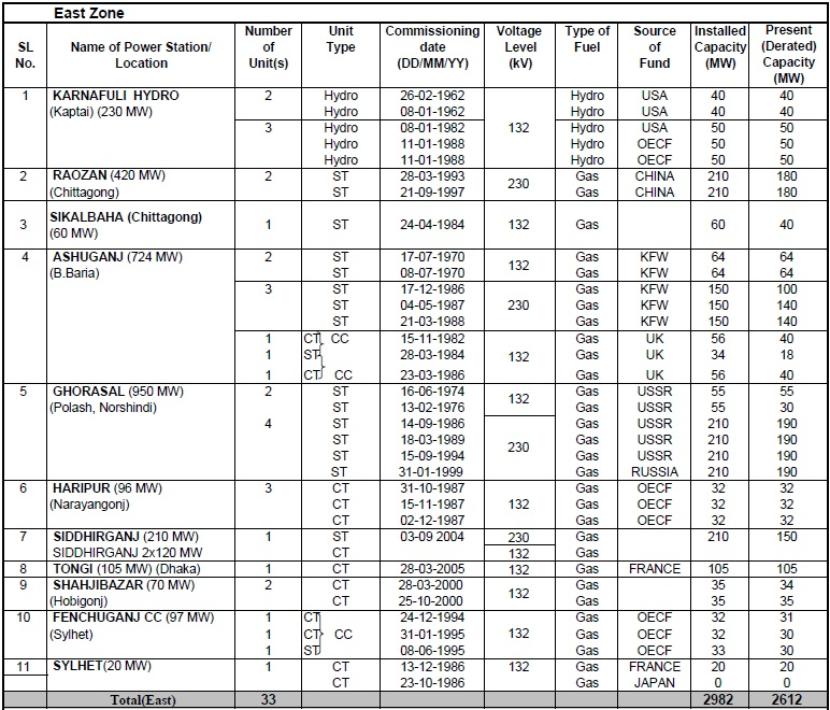
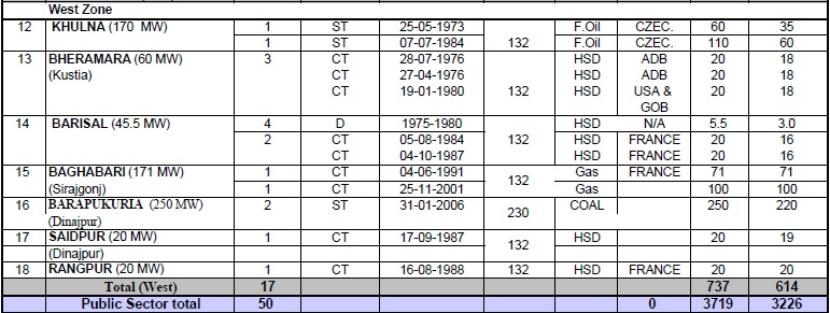
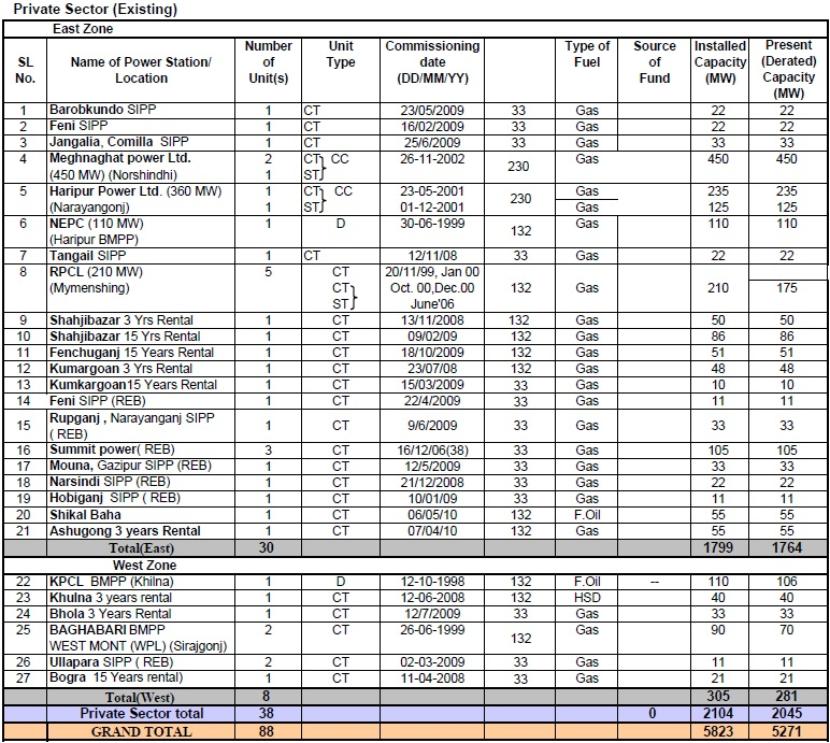

Energy demand in Bangladesh will be more than double by 2020. With commercial energy increasing by 400%. 53% of the present supply of energy comes from traditional fuels and the remaining from commercial sources. This constitutes a continued transfer away from traditional energy supplies towards commercial energy, that has been characteristic of Bangladesh’s energy development since the 1980’s. In rural Bangladesh, energy demand is mostly for household cooking which is almost completely supplied from biomass resources. When viewed at a national level, the utilization of biomass fuels for household cooking comprises roughly half of the total energy balance of Bangladesh. Thus, the combustion of biomass for household cooking is incredibly significant in regards to energy sustainability in Bangladesh. But really the natural resources are becomes low.
So Renewable resources should the best energy resources for future. Bangladesh is endowed with plentiful supply of renewable sources of energy. Out of various renewable sources solar, biomass, peat, and hydro-power can be effectively used in Bangladesh (Government of Bangladesh, 1991). Renewable energy practices in Bangladesh are
· Solar Energy
· Wind Energy
· Biomass Energy
· Hydro-power energy
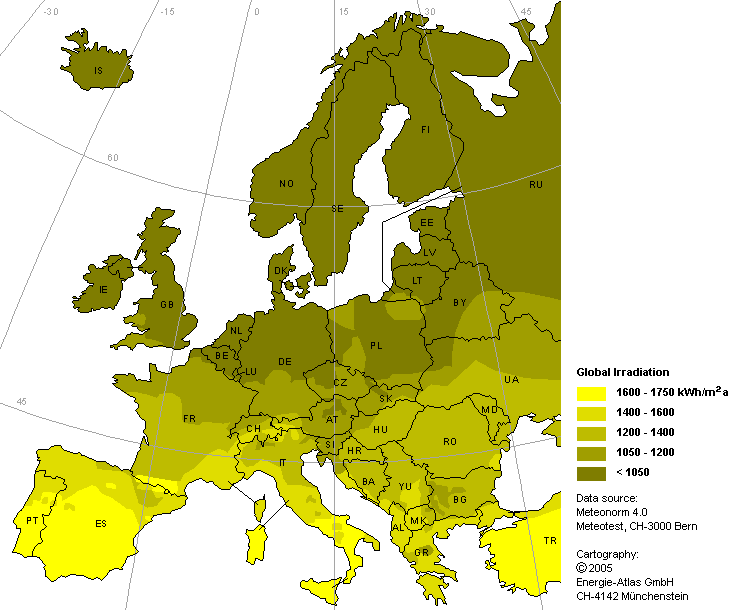
Solar Energy may be the best way to tackle the future energy requirement. Solar Energy is inexhaustible and pollution free. It is available everywhere; but the greatest amount is available between two broad bands encircling the earth between 15” and 35” latitude north and south. Fortunately, Bangladesh is situated between 20”43’ north and 26”38’ north latitude and as such Bangladesh is in a very favorable position in respect of the utilization of solar energy. Annual amount of radiation varies from 1840 to 1575 kwh/m2 which is 50-100% higher than Europe. Taking an average solar radiation of 1900 kwh per square meter, total annual solar radiation in Bangladesh is equivalent to 1010 X 1018 J. present total yearly consumption of energy is about 700 X 1018 J. this shows even if 0.07% of the incident radiation can be utilized, total requirement of energy in the country can be met. At present energy utilization in Bangladesh is about 0.15 watt/sq. meter land area, whereas the availability is above 208 watt/sq. meter. This shows the enormity of the potentiality of this source in this country (Eusuf, 1997)
Differences and Responsibilities
Bangladesh is heavily dependent upon traditional renewable energy sources and 65% of final energy demand of the country is met by the traditional biomass fuels. Traditionally solar thermal energy has been utilized in
different household and industrial activities in Bangladesh. These utilization are mainly open air drying of agricultural products, production of salt from sea water, drying of cloths, fish etc. In the rivers wind energy is utilized in the sailboats.
Modern Renewable Energy Technologies (RETs) are mostly in the research, development and demonstration phase. Establishment of Renewable Energy Development Agency (REDA) has been proposed by the National Energy Policy (NEP), 1995 of GOB.
“ National Energy Policy (NEP), 1995” of Bangladesh has got guidelines for Renewable Energy Technologies
A “ Draft Renewable Energy Policy” has been submitted by the Power Cell of MEMR which is yet to be approved by the Government of Bangladesh (GOB).
And Bangladesh Power is totally dependent on natural fossil fuels, oil, natural gas etc. But the hand Europe and North American countries are one-step ahead with "Renewable resources".
Renewable Energy and Europe
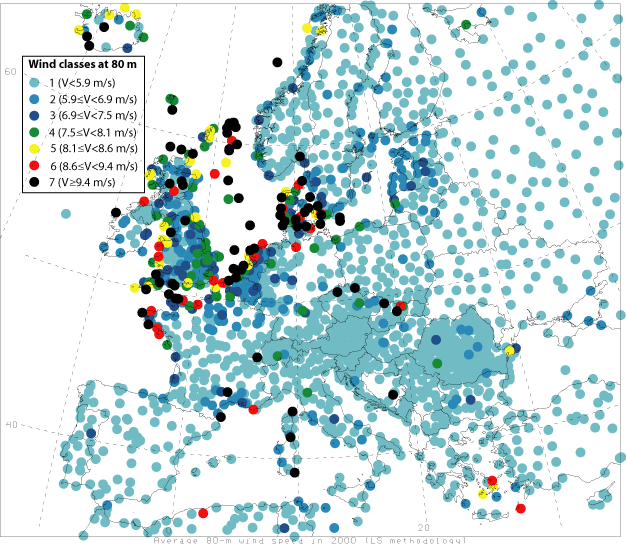
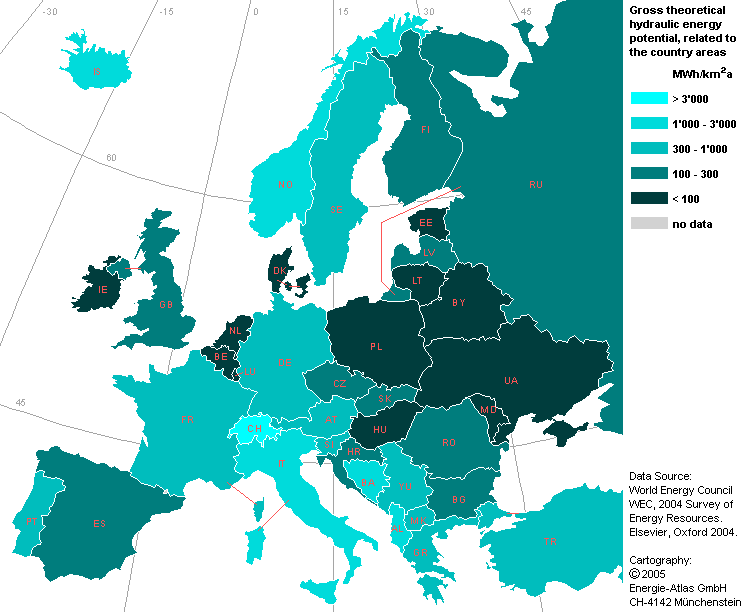
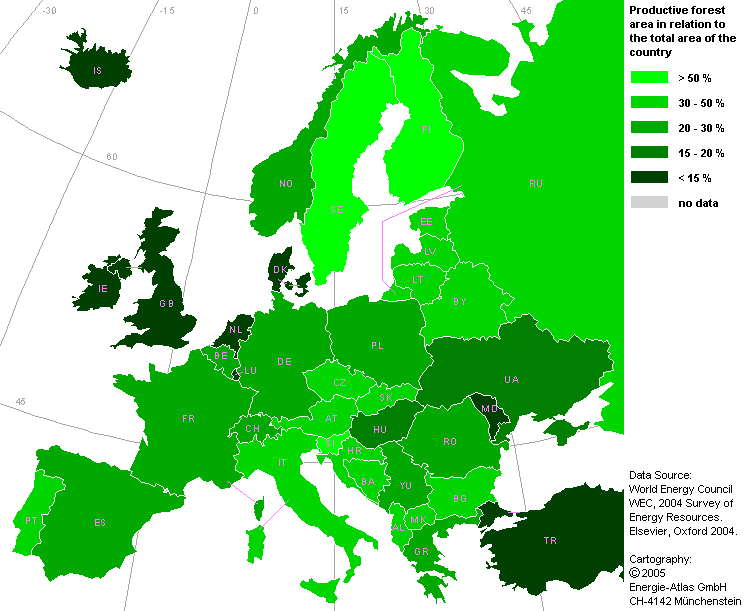
Europe is the world leader in renewable energy. Denmark is flanked by some 2,300 wind turbines, supplying 15% of its electricity. Germany is on course to have 140,000 solar-panelled rooftops by 2005. And more than half of Scandinavia’s energy comes from hydropower.
The development of renewable energy - particularly energy from wind, water, solar power and biomass - is a central aim of the European Commission's energy policy. And as part of Kyoto-protocol efforts to curb carbon emissions, the European Commission has pledged that renewable sources will make up 22% of Europe’s energy supply by the end of this decade (up from 14% in 1997).
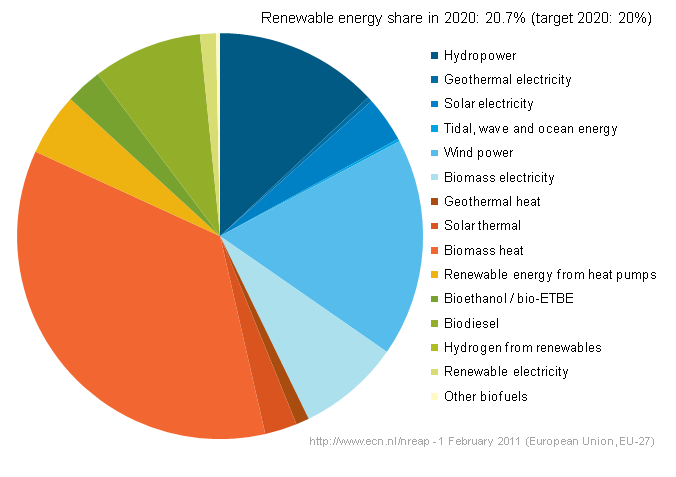
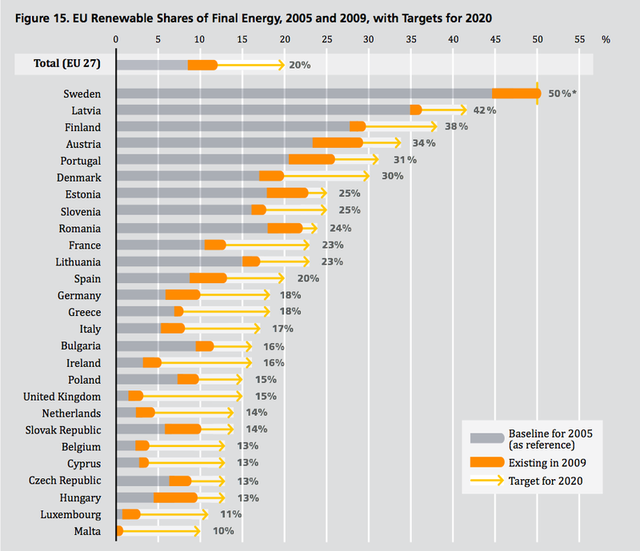
Europe has committed to obtain 20 % of its energy from renewable sources by 2020. An analysis of the 27 EU Member State action plans shows that renewable energy output is projected to grow by 6 % per year on average. Wind power, solar electricity and biofuels are foreseen to contribute with the highest growth rates. If all Member States follow the trajectory outlined in their plans, the EU will exceed its 20 % renewable energy target by 0.7 percentage points.
Renewable and North America